
Identifying the Brown Recluse
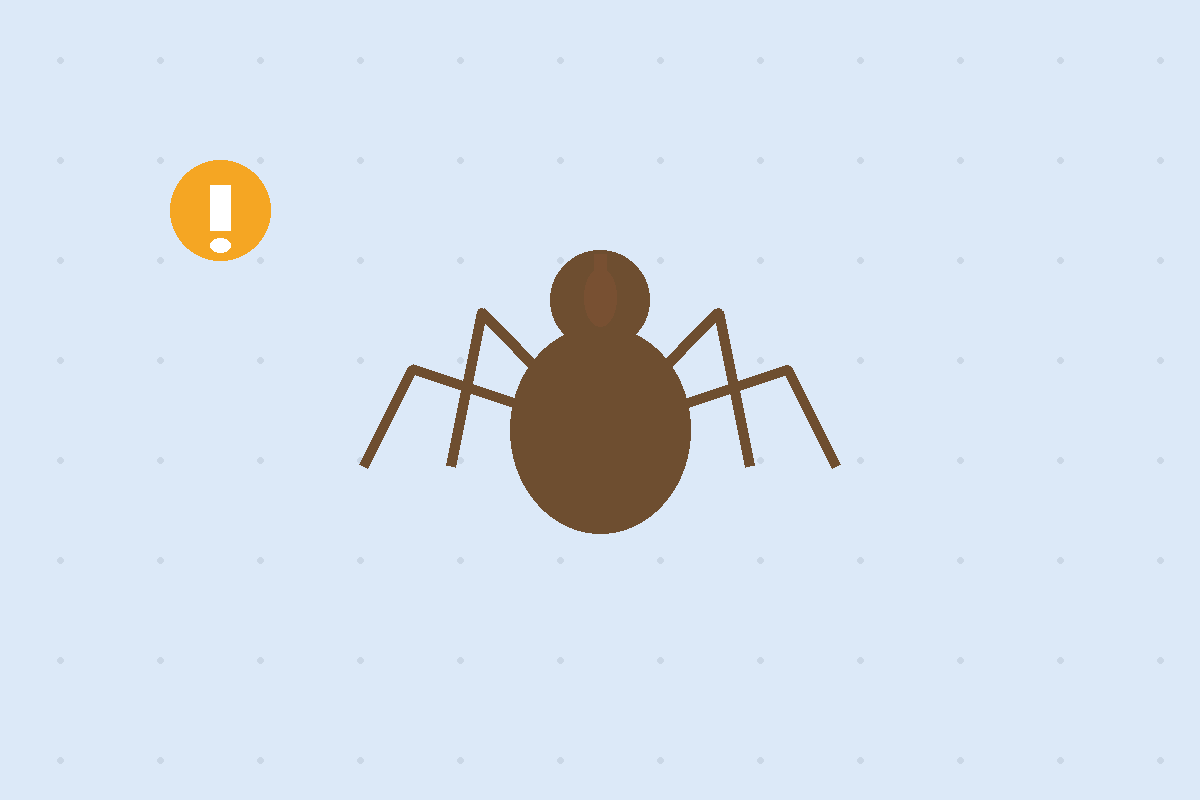
The brown recluse earns its name from its shy, hidden habits, which is exactly what makes it dangerous: you rarely see it until you have disturbed it. The spider is light to medium brown, with a body about the size of a quarter including its legs, and its most reliable identifying feature is a dark, violin-shaped marking on the top of its head region, with the neck of the violin pointing back toward the abdomen. Unlike many spiders, it has six eyes arranged in three pairs rather than the usual eight, though that is hard to see without magnification.
Where it hides is the key to understanding it. The brown recluse seeks out dry, undisturbed, cluttered spaces and stays out of sight, so in DFW homes it shelters in closets, attics, basements, garages, storage boxes, stacks of clothing or paper, behind furniture, inside shoes, and within wall voids. It is not aggressive, but because it hides in the things people reach into and put on, most bites happen when the spider is unknowingly pressed against skin, pulling on a stored jacket, slipping on a shoe, or moving a long-undisturbed box.
If you are finding brown, violin-marked spiders in the quiet, cluttered corners of your home, it warrants attention. Because the brown recluse hides so well, a professional inspection is often the only way to gauge how established a population really is.
Why the Brown Recluse Is Dangerous
This hidden spider is one to take seriously. Here is what sets the brown recluse apart from the harmless spiders around your home.
A brown recluse bite can, in some cases, cause a slow-healing wound with serious localized tissue damage, and reactions warrant medical attention, especially in vulnerable people.
Unlike outdoor spiders, the brown recluse shelters inside, in closets, attics, storage, and wall voids, putting it in daily contact with where people live.
Most bites happen when the spider is pressed against skin unknowingly, inside a shoe, a stored garment, or bedding, not from an aggressive encounter.
Boxes, stored clothing, paper stacks, and undisturbed rooms give the brown recluse the quiet harborage it depends on, so clutter directly fuels infestations.
Females lay eggs in the same hidden spaces, so an established indoor population can persist and grow quietly, out of sight, over time.
Its shy, nocturnal, hidden habits mean populations often go unnoticed until they are well established, which is why professional inspection matters.
How We Treat Brown Recluse
Why Brown Recluse Needs a Professional, Thorough Approach
The brown recluse is arguably the single strongest case for professional pest control among spiders, because everything that makes it dangerous also makes it hard to handle yourself. It hides in the exact undisturbed, cluttered spaces a homeowner rarely disturbs, it is active at night and out of sight, and it can sustain a quiet indoor population for a long time before anyone realizes how established it is. A surface spray on baseboards does almost nothing to a spider living deep in wall voids, attic corners, and storage boxes.
Our approach is deliberately thorough because half-measures fail with this spider. We inspect the hidden spaces it actually uses, often deploy monitoring to understand the true extent of the population, reduce the clutter and harborage it depends on, and treat the specific concealed areas where it shelters and travels. Because brown recluse populations are persistent, we also emphasize ongoing monitoring rather than a single visit, tracking results and adjusting over time.
If you suspect brown recluse in your DFW home, especially if anyone has been bitten or you are finding them in living areas, we recommend a professional inspection rather than waiting or relying on store-bought products. It is a spider that rewards being taken seriously. For the broader spider picture, see our main spider control page, and for North Texas's other dangerous species, our black widow control page.
The Myth and Reality of Brown Recluse Bites
Few pests are surrounded by as much misunderstanding as the brown recluse, and separating myth from reality helps homeowners respond sensibly. The reality is that the brown recluse is a genuinely dangerous spider whose bite can, in some cases, cause serious localized tissue damage and a slow-healing wound, and it is established across much of North Texas, so it deserves real respect. At the same time, the spider is not aggressive and bites are relatively uncommon relative to how often they are blamed, since many wounds attributed to brown recluses turn out to have other causes.
That combination, real danger but frequent misattribution, is exactly why professional identification matters so much. Assuming every skin lesion is a recluse bite causes needless alarm, while dismissing a genuine brown recluse presence because bites are rare lets a hidden population grow. The sensible middle path is to take the spider seriously, identify it accurately, and address an established population professionally rather than reacting to fear or rumor.
What is not a myth is how quietly a brown recluse population can build. Because the spider is nocturnal, shy, and hidden, a home can host a significant number before anyone realizes it, which is why any confirmed sighting, and especially any bite, warrants a professional assessment of how established the population really is.
Reducing Brown Recluse Habitat at Home
Because the brown recluse lives in clutter and undisturbed spaces, reducing that habitat is one of the most effective things a homeowner can do, and it directly supports professional treatment. Cutting down on storage clutter, especially cardboard boxes, stacks of clothing and paper, and long-undisturbed items in closets, attics, basements, and garages, removes the quiet harborage the spider depends on. Storing items in sealed plastic containers rather than cardboard, and keeping stored clothing and shoes off the floor, denies the recluse its preferred hiding spots.
Everyday caution reduces the encounters that lead to bites. Shaking out shoes, gloves, and clothing that has been stored or left undisturbed, checking bedding that sits against walls, and wearing gloves when moving long-untouched boxes all reduce the chance of pressing against a hidden spider, which is how nearly all bites happen. Sealing gaps around the foundation, utility penetrations, and entry points limits movement between wall voids and living space.
These measures shrink the habitat and the risk, but the brown recluse is persistent enough that habitat reduction alone rarely clears an established population. Paired with professional treatment and monitoring of the concealed spaces the spider actually uses, they become part of an approach that genuinely brings a recluse problem under control over time.
Why Monitoring Matters With Brown Recluse
One thing sets brown recluse control apart from most pest work: the importance of monitoring over time. Because the spider is hidden, nocturnal, and persistent, and because populations build quietly, a single treatment visit gives an incomplete picture of both the problem and the progress. Monitoring devices placed in the concealed spaces the recluse frequents reveal how extensive a population actually is and whether it is declining after treatment, turning guesswork into evidence.
This is why our approach emphasizes an ongoing relationship rather than a one-and-done visit. We treat the concealed harborage, place monitoring to track results, and return to assess and adjust, because a recluse population that appears reduced on the surface may still be sustaining itself in wall voids and undisturbed corners. Monitoring tells us whether the treatment is truly working or whether more attention is needed.
For homeowners, the practical benefit is confidence. Instead of hoping a treatment worked, monitoring provides objective evidence of whether the brown recluse presence is genuinely coming down, which is exactly the reassurance you want with a spider that carries real medical concern and hides so well.
Brown Recluse Questions
How do I identify a brown recluse?
It is light to medium brown with a dark violin-shaped marking behind its head and six eyes in three pairs. It hides in undisturbed indoor spaces. Because misidentification is common, professional confirmation is best.
How serious is a brown recluse bite?
A bite can cause a slow-healing wound with serious localized tissue damage in some cases, and reactions warrant medical attention, especially in vulnerable people. Bites are uncommon but should be taken seriously.
Where do brown recluses hide?
In dry, undisturbed, cluttered spaces: closets, attics, basements, garages, storage boxes, stacks of clothing or paper, behind furniture, inside shoes, and within wall voids.
Why is professional treatment recommended?
The recluse hides where surface sprays never reach, is nocturnal and persistent, and builds populations quietly. A thorough, monitored professional approach targets the concealed spaces and tracks whether the population is truly declining.
Can I control brown recluse by reducing clutter alone?
Reducing clutter helps significantly by removing habitat, but an established population is persistent enough that habitat reduction usually needs to be paired with professional treatment and monitoring to bring it under control.
Are brown recluses common in Dallas-Fort Worth?
They are established across much of North Texas. Because they hide so well, populations often go unnoticed until well established, which is why any confirmed sighting is worth a professional assessment.
Protecting Your Family From Brown Recluse
Because the brown recluse hides in the everyday spaces where families live and store their belongings, protecting a household comes down to a mix of caution, habitat control, and professional treatment working together. The spiders shelter in closets, storage boxes, stored clothing and shoes, bedding against walls, and undisturbed corners, which means the most effective personal precautions target exactly those spots: shaking out shoes and clothing that have been stored or left still, checking bedding, using sealed containers instead of cardboard, and keeping items off the floor in closets and storage areas.
Children and vulnerable family members warrant extra thought, since reactions to a brown recluse bite can be more serious in them. Play areas, closets, and storage spaces used by kids are worth keeping especially clear of clutter and undisturbed harborage, and toys or items pulled from long-untouched storage are worth checking. These are simple habits, but against a spider whose bites come almost entirely from unknowing contact, they meaningfully reduce risk.
What personal precautions cannot do is clear an established population from the wall voids, attics, and concealed spaces where the brown recluse truly lives, which is where professional treatment and monitoring come in. The reliable protection for a household is the combination: family caution and habitat reduction lower the odds of an encounter day to day, while professional treatment and monitoring bring the underlying population down over time. Neither alone is as effective as both together.
It is also worth setting expectations honestly. Because the brown recluse is so persistent and well hidden, controlling an established population is a process measured over time rather than a single visit, and monitoring is what tells us it is genuinely working. Families are best served by an approach that treats, monitors, and adjusts, giving evidence of real progress rather than a one-time reassurance that may not hold.
For any household that has confirmed brown recluse, and especially any where someone has been bitten, the sensible path is to combine these family precautions with a professional, monitored treatment program. Taking the spider seriously without panicking, and addressing both the daily-encounter risk and the hidden population, is what actually keeps a family safe from North Texas's most concerning spider.
A Long-Term Approach to a Persistent Spider
The brown recluse rewards patience and consistency more than almost any pest we treat, because established populations are hidden and persistent and rarely clear in a single visit. Our approach is built as an ongoing relationship: we treat the concealed harborage, monitor to track whether the population is genuinely declining, and return to assess and adjust, giving you evidence of real progress rather than a one-time hope.
We handle brown recluse for homes and businesses across the Dallas-Fort Worth Metroplex, combining thorough treatment of the spaces this spider actually uses with the family precautions and habitat reduction that lower daily risk. If you suspect brown recluse in your home, especially after a bite, a professional inspection is the sensible starting point, and we are ready to help.
The Bottom Line on Brown Recluse
The brown recluse deserves respect, accurate identification, and a patient, professional approach rather than either panic or dismissal. It is genuinely dangerous and easily encountered because it hides where families store and reach, yet bites are less common than they are blamed, and populations build quietly out of sight. That combination is exactly why habitat reduction, family caution, and thorough, monitored professional treatment together are the reliable answer. Taking the spider seriously, confirming what you actually have, and addressing an established population over time is how North Texas homeowners bring this hidden, persistent spider genuinely under control.
Suspect Brown Recluse in Your Home?
This hidden spider rewards a thorough, professional approach. We will inspect, monitor, and treat the concealed spaces it depends on. Schedule a free inspection today.
Schedule Your Free InspectionAbout LegendaryWays Pest Control
We are an award-winning, locally owned pest control company with over 20 years of experience across the Dallas-Fort Worth Metroplex. We treat the brown recluse with the thorough, monitored approach this hidden, persistent spider genuinely requires, inspecting and treating the concealed indoor spaces a surface spray never reaches.

Recent Comments